domingo, 23 de agosto de 2009

Funny witty story that made me think about this persisting educational trend toward exalting mediocrity

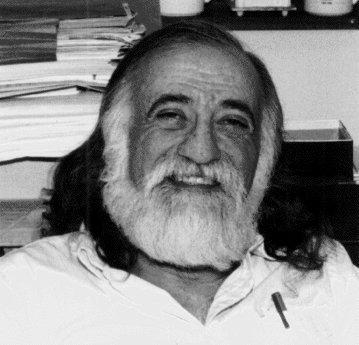
Yale Patt"Professor" and "inspiration" are kin words (or at least they should be). Every word tells in this funny, inspiring speech by professor Yale Patt (Electrical and Computer Engineering, University of Texas at Austin; see old photo from his homepage), at the IEEE 60th anniversary celebration in San Juan (Puerto Rico, 2006). It is called "The future of Computer * (Are we in serious trouble?)", the "*" meaning Science, Engineering, Architecture... you pick it.

It is very well worth its 44 min (plus 16 of question answering), but don't take my word for it: even if you're not into computer architecture or if you think you can't afford to watch the whole video, try this short story inbetween 39:24 and 42:16, in which professor Patt describes his old man's reaction to his winning a medal for losing.

I don't want to spoil the story, but if we had more people speaking out like this maybe we could get back on track in education, helping students to "get it" instead of helping them "feeling good about themselves" (or trying to, since it doesn't work). "You get a medal when you win; you don't get a medal when you lose". Professor Patt also talks about computer architectures, Moore's Law (on doubling chips' capacity), education in Computing, ..., quantum computing, NP-completeness, ..., marriage, cellphones, "football" (the one played with the hands), etc. in a very enthusiastic way.

quarta-feira, 19 de agosto de 2009

EGC inova ingresso 2010 com nivelamento a distância

[Novo post sobre o processo seletivo em 2010 para ingresso em 2011]

O EGC/UFSC (Programa de Pós-Graduação em Engenharia e Gestão do Conhecimento da Universidade Federal de Santa Catarina) abriu inscrições para o processo seletivo de ingresso no mestrado e doutorado em 2010. A pré-inscrição vai de 21/8 a 19/9, seguida de nivelamento com avaliação (21/9 a 1/11), entrega de anteprojeto de pesquisa, currículo Lattes e form de inscrição (até 1/11) e exame de avaliação (7/11 - presencial para candidatos ao doutorado). As informações detalhadas (e oficiais - isto aqui é só um blog post pessoal) devem ser vistas no Edital de Seleção na página do EGC.

A disciplina oferecida a distância versará sobre o conteúdo tratado até 2008 na disciplina regular-presencial e obrigatória Introdução à Engenharia e Gestão do Conhecimento. Com a inovação, a disciplina tradicional deixa de ser oferecida. Essa inovação fomenta a construção de uma compreensão, pelos novatos, sobre o objeto de pesquisa e formação do EGC/UFSC (o conhecimento como fator de produção) e amplia a oportunidade para que candidatos bem preparados possam empreender seus projetos de pesquisa de pós-graduação interdisciplinares no EGC. O EGC vem recebendo, desde 2004, entre 3 e 5 centenas de inscrições para as cerca de 60 vagas anuais para ingresso no mestrado ou doutorado.

quinta-feira, 13 de agosto de 2009

O Commons ou "rossio não-rival" perde seu maior intérprete brasileiro

É com tristeza que a gente recebe esta notícia: Não está mais entre nós Imre Simon, professor (USP), pensador da área de Computação (ergo avis rara!), grande disseminador das idéias de Yochai Benkler em particular e de Commons em geral (termo que ele traduziu como "rossio não-rival", acho que meio de brincadeira, porque é difícil de pegar). A lista de discussão da SBC (Sociedade Brasileira de Computação) deve transbordar de eulogias.

Para quem gosta do assunto ou quer saber mais, vale uma visita à página dele. Era uma voz diferenciada entre nossos assim chamados 'notáveis'. Era um dos acadêmicos com plena noção de que estamos no Século XXI, de que a sociedade do conhecimento existe, de que o mercado da informação é dirigido pela oferta e não pela demanda...

Enfim, uma perda qualitativa importante não só no meio acadêmico-universitário, mas também na sociedade brasileira (ele que era húngaro de nascimento). Um luminar a menos para explicar certas coisinhas básicas do mundo contemporâneo.

quinta-feira, 23 de julho de 2009

A week at the World Conference on Computers in Education (ppts & preprints available)

WCCE dates approaching, swine flu notwithstanding. I hope the flu doesn't prevent anyone from coming to Bento Gonçalves-RS (Brazil) next week (July 27-31, 2009). Let me tweet about the papers I will be presenting:

  • Kern VM, Possamai O, Selig PM, Pacheco RCS, Souza GC, Rautenberg S, Lemos RTS: Growing a Peer Review Culture among Graduate Students (preprint here, slides below).
    Thursday 30th, 15:30-17:00, Aud. 3, 2nd paper of 3 (30-min presentation).
    Session NET 3.3, Network and Collaboration 3.3

  • Kern VM, Saraiva LM, Braz ERC: Emergo: Academic Performance Assessment and Planning with a Data Mart (preprint here, slides below).
    Monday 27th, 11:45-12:45, Aud. 2, 2nd paper of 4 (15-min presentation).
    Session INNO 1.1, Innovation and creativity in schools 1.1

Hopefully there will be intense feedback in the sessions I'll present or attend to. Excellent opportunity. Slides of my presentations were uploaded to SlideShare, so here they are:


Off-topic update: It was very nice to visit the Guarani indians (from Viamão, near Porto Alegre-RS) booth at the conference site. They have a project and a blog (Jaikuaa - means "to pay attention", "to listen") coordinated by the Federal University of Rio Grande do Sul (UFRGS) in which Guarani youngsters work with camera obscura and production of pinhole photography.

They also play with regular (digital) photo and video cameras. The blog is in Portuguese, with some text in Guarani and in English. And there I am, visiting:


quarta-feira, 22 de julho de 2009

Wesch "The machine is us/ing us" strikes again: World Simulation

Anthropologist Michael Wesch (from Kansas State University, author of "The machine is us/ing us") gives away another awesome lesson: a YouTube report on the World Simulation conducted with his students, with the help of Twitter (ok, I tweet) and Jott (don't know) through the cellphone.

They've created a fake world with lands and peoples and developed a whole history, with commerce, wars, domination from colonization to core-periphery dynamic etc. The fake world evolution described in the video is interspersed with real-world facts, for instance, about diamonds in Africa, the wars around it, the (little little) money made by extractors and cutters (25 cents per diamond cut; many sharp-eyed cutters are children in India)... Makes you wonder how can there be any glamour around diamonds.

It looks like that War (board) game but much enlarged and enriched. It is, indeed, a "radical experiment in education" that I praise and recommend watching (4:40 - be ready to stop the presentation as the captions flash in unreadable intervals). It is an inspiration for me as a professor (I've been trying things of this sort with peer review in education and concurrency control learning games) and for anyone pursuing real educational systems.

Dr. Wesch ends by quoting the cultural anthropologist Margaret Mead (1901-1978): "Never doubt that a small group of thoughtful, committed citizens can change the world. Indeed, it's the only thing that ever has." This prompted a Text Comment from kdcruz75: "never doubt that a small group of thoughtless, powerful committed hidden elite can control the human populace. Indeed it is the only thing that ever has". Well... the discussion catches on as the view count soars. See the video:


sexta-feira, 17 de julho de 2009

Juno em 27/7/09 (mais cinema e psicanálise em Floripa)

Atendendo a pedido, divulgo mais uma sessão do Ciclo de Cinema e Psicanálise, (a anterior foi "Brilho eterno...") , promoção do CEPSC (Centro de Estudos Psicodinâmicos de Santa Catarina):

Juno (verbete na Wikipedia)

  • 29 de julho de 2009 (Quarta-feira), 18:30
  • Auditório do Ed. Casa do Barão
    Av. Othon Gama Deça, 900
    Centro - Florianópolis
  • Entrada franca

Debatedoras:

  • Maria Inês Gasperini - Médica e Educadora Sexual
  • Ana Paula Casagrande Darós - Psicóloga Clínica e Associada do CEPSC

Início do Debate: 20:30
Fone CEPSC: +55 (48) 3223-6422.

quarta-feira, 8 de julho de 2009

Science of happiness at TED Talks

Okay, this might be waaay outdated, but there must be others who are not really aware about TED Talks as I wasn't (had heard about it, never went for it). And those who know Ted Talks but not this talk I'm mentioning. Thanks due to Andréa Bordin for sharing this.

I went there, saw the mosaic of speeches and begun with Nancy Etcoff on the surprising science of happiness. There is a lot of other seemingly excellent stuff.

So this is only a tweet to those who didn't know: Yes, Ted Talks is true to its subtitle: "Ideas worth spreading". Etcoff's talk end with this simple yet effective and excessively forgotten idea from Epictetus: "First, say to yourself what you would be. Then do what you have to do".